
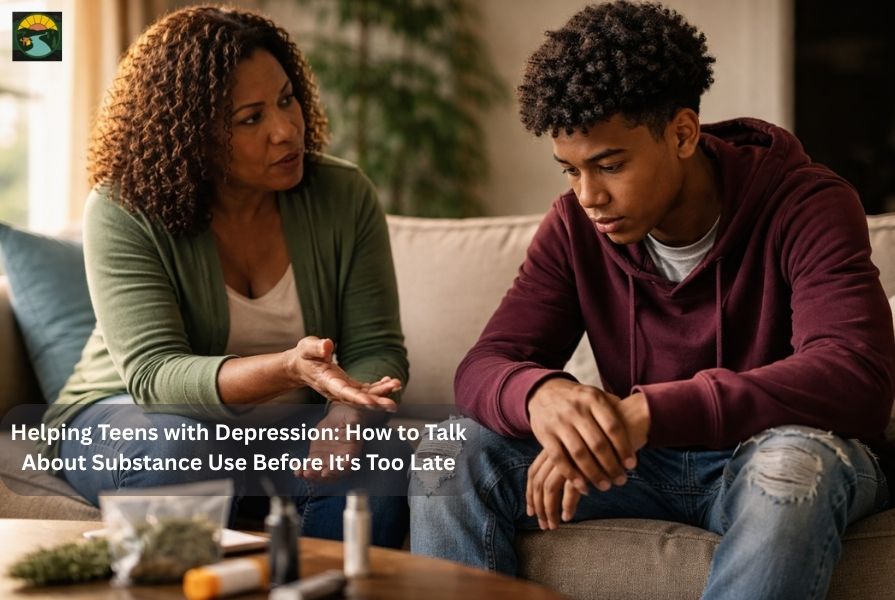
Helping teens with depression means talking openly about substance use before it becomes a crisis. Teens who feel heard at home are less likely to self-medicate. Start the conversation early, listen more than you speak, and seek professional support when needed.
When a teenager is struggling with depression, substance use often follows — quietly and fast. Parents who understand the connection between teen mental health and drug or alcohol use are better equipped to step in early. This guide walks you through how to have real, honest conversations with your teen before a manageable problem becomes a crisis.
Key Takeaways
- Depression and substance use frequently occur together in teenagers — addressing one while ignoring the other rarely works.
- Early, open conversations significantly reduce the risk of teen substance use developing into a full-blown disorder.
- The way you start the conversation matters — curiosity and concern land better than accusation and interrogation.
- Normalizing mental health care at home breaks down stigma and makes teens more willing to seek help.
- If your teen’s substance use is connected to ongoing depression, dual diagnosis treatment offers the most effective path forward.
- Recovery takes time, and consistent family involvement is one of the strongest predictors of long-term success.
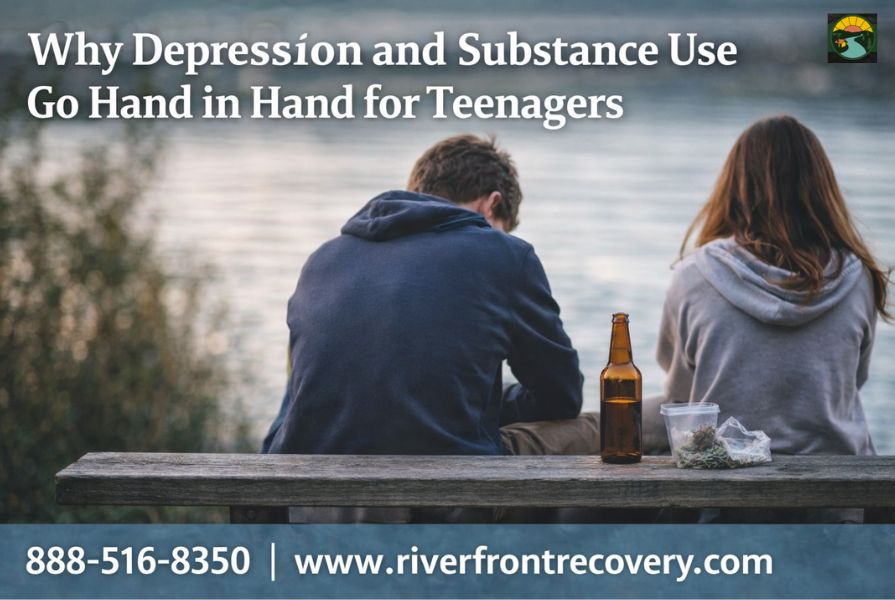
Why Depression and Substance Use Go Hand in Hand for Teenagers
Most parents think of substance use and depression as two separate issues. In teenagers, they almost never are.
A teen dealing with social anxiety, academic pressure, trauma, or untreated depression often reaches for something that numbs the noise — alcohol, marijuana, prescription pills, or whatever is easiest to access. It is not a weakness. It is a brain looking for relief in the wrong place.
According to the Substance Abuse and Mental Health Services Administration (SAMHSA), adolescents with a major depressive episode are more than twice as likely to use illicit substances compared to teens without one. That overlap is not a coincidence.
Understanding why teens turn to substances is the first step toward having a conversation that actually lands.
The Warning Signs Parents Often Miss
You do not need to be a clinician to notice when something has shifted. Most parents already feel it — they just are not sure what they are looking at.
Here are behavioral and emotional signals that often point to co-occurring depression and substance use:
- Withdrawing from family and close friends — not typical teenage privacy, but a sharp and noticeable pull away from people they used to enjoy
- Losing interest in hobbies or activities they previously loved, like sports, art, or music
- Changes in sleep patterns — sleeping far too much or barely at all
- Unexplained mood swings that feel bigger than typical teenage moodiness
- Decline in grades or skipping school without a clear reason
- Secrecy around their phone, friends, or whereabouts
- Red eyes, altered speech, or unusual smells that appear repeatedly
- Spending money without explanation or items going missing from the house
One or two of these in isolation may not mean much. But a cluster of these signs together — especially paired with a teen who seems emotionally shut down — warrants a serious conversation.
What Keeps Parents From Having the Talk
Many well-meaning parents delay the conversation for reasons that feel valid in the moment:
- “I do not want to plant the idea in their head.”
- “They will just get defensive and shut down.”
- “Maybe it is just a phase.”
- “I do not want to damage our relationship.”
These concerns are understandable, but research consistently shows the opposite. Teens whose parents talk openly about substance use are significantly less likely to experiment — and when they do struggle, they are more likely to reach out.
Silence does not protect teenagers. Open, non-judgmental communication does.
How to Start the Conversation Without It Falling Apart
This is where most parents feel stuck — not whether to talk, but how.
The goal is not to interrogate your teen. It is to open a door they feel safe enough to walk through.
Choose the Right Moment
Do not sit your teen down at the dinner table with the energy of a formal meeting. Teenagers open up more during side-by-side activities — driving somewhere, cooking, taking a walk. The absence of direct eye contact often helps them feel less cornered.
Lead With Curiosity, Not Accusation
There is a significant difference between these two openings:
- “I know you have been drinking. We need to talk.”
- “I have been thinking about how hard things feel right now. I want to understand what is going on with you.”
The second one creates room. The first one creates walls.
Talk About What You Have Observed — Specifically
Vague statements like “You seem off lately” invite defensiveness. Specific, caring observations land differently:
- “I noticed you stopped going to basketball practice last month, and I know you used to love it. I am not trying to get you in trouble — I am trying to understand.”
Ask Questions and Then Actually Listen
Many of these conversations fail because parents move from question to lecture in under two minutes. After you ask, close your mouth and let the silence breathe. Your teen may take a moment to gather words. That pause is not failure — it is progress.
Talking About Depression Directly
One of the most important things you can do for a teenager who may be self-medicating is to name depression out loud — without shame.
Teens often do not recognize what they are experiencing as depression. They just know they feel terrible, that nothing helps, and that alcohol or weed takes the edge off.
When you say clearly, “Sometimes when people feel really low for a long time, they start using substances to cope — and it often makes the depression worse over time,” you are giving your teen a framework for understanding their own behavior. That kind of insight is more powerful than any lecture.
Normalize Getting Help
A teenager who hears their parents say “Going to therapy or talking to a doctor about how you feel is just as normal as seeing a doctor when your knee hurts” is far more likely to accept help when it is offered.
Stigma is still the biggest barrier to teen mental health care in the United States. Parents who treat depression as a health condition — not a character flaw — chip away at that barrier at home.
When Casual Use Becomes Something More Serious
There is a difference between a teenager experimenting once at a party and a teenager who is using substances regularly to cope with emotional pain.
Signs that substance use has crossed into a more serious pattern include:
- Using alone or in secret, rather than socially
- Needing increasing amounts to feel the same effect
- Feeling anxious, irritable, or physically unwell when not using
- Continuing to use even after consequences at school or home
- Expressing that they cannot imagine stopping or do not want to
- Losing touch with who they were before — their interests, their relationships, their goals
If several of these patterns are present, this is no longer a “have a talk” situation. This is a moment for professional support.
The Role of Depression Treatment in Preventing Addiction
Here is what many families do not realize until they are deep into a crisis: treating the underlying depression is often the key to addressing substance use.
When a teenager’s emotional pain is taken seriously and addressed through therapy, medication when appropriate, and a structured support system, the need to self-medicate decreases. The two issues are not independent. Treating one without the other consistently produces poor long-term outcomes.
This is why dual diagnosis treatment — addressing mental health and substance use together — has become the standard of care for adolescents and adults alike.
Breaking the Silence: Helping Teens with Depression Avoid Substance Abuse
Depression in teens can lead to risky choices, including substance use. Open, honest conversations create trust and awareness. By recognizing early signs and offering support, parents and caregivers can help teens feel heard, build resilience, and choose healthier ways to cope before problems grow.
Get Started NowWhat to Do If Your Teen Refuses to Talk
Not every teen will open up the first time. Or the second. Persistence, done gently, matters.
Some practical approaches when the door feels closed:
- Write a letter. Some teens respond better to the written word than face-to-face conversations. A calm, loving letter that expresses concern without accusation can crack open a closed door.
- Invite a trusted adult. Sometimes a coach, aunt, uncle, or family friend holds more weight than a parent in a particular moment. Use that.
- Seek professional guidance yourself first. A therapist or family counselor can coach you on how to approach your specific teenager before you attempt another conversation at home.
- Set clear but compassionate limits. Love and boundaries are not opposites. You can make clear that substance use at home is not acceptable while still communicating that you are there to help, not punish.
Getting Professional Help: What That Actually Looks Like
When a family reaches the point where professional help is necessary, it can feel overwhelming. The options seem endless and the language is unfamiliar.
Here is a simple breakdown of what different levels of care mean:
| Level of Care | What It Involves | Best For |
| Outpatient Therapy | Weekly sessions with a therapist | Early-stage concerns, mild symptoms |
| Intensive Outpatient Program (IOP) | Several sessions per week, teen goes home | Moderate use, willing to engage |
| Residential Treatment | 24/7 structured care in a facility | Significant substance use + depression |
| Medical Detox | Supervised withdrawal management | Physical dependence on substances |
| Dual Diagnosis Treatment | Mental health + addiction treated together | Co-occurring depression and substance use |
For families in Georgia and the surrounding Southeast, Riverfront Recovery offers both medical detox and residential treatment for adults struggling with substance use and co-occurring mental health conditions. Their program uses low client-to-therapist ratios and a private, nature-based setting — which research consistently supports as beneficial for recovery outcomes.
Supporting Your Teen Through Recovery
Recovery is not an event. It is a long process that requires consistent, patient support from the people who matter most.
Here is what helpful family support looks like during and after treatment:
- Attending family therapy sessions when offered
- Educating yourself on depression and substance use disorders rather than operating on assumption
- Avoiding shame-based language at home — words like “junkie,” “addict,” or “weak” cause damage that lasts
- Celebrating small wins — a week sober, a therapy session attended, a hard conversation had
- Staying engaged even when progress feels slow
Teenagers in recovery who feel connected to their family have significantly better outcomes than those who feel alone. Your presence matters more than your expertise.
Frequently Asked Questions
Q: How do I know if my teen’s depression is serious enough to need professional help?
If your teen’s low mood, withdrawal, or loss of interest has lasted more than two weeks and is affecting their daily functioning — school, friendships, eating, sleeping — it is serious enough to seek an evaluation from a mental health professional.
Q: Can talking to my teen about drugs actually make them more curious about using?
Research says no. Studies consistently show that teens whose parents talk openly and honestly about substance use are less likely to use — not more.
Q: What do I do if I find drugs in my teen’s room?
Stay calm before you react. Remove the substances, then approach the conversation from a place of concern rather than punishment. The goal is to understand what is driving the use, not just to discipline the behavior.
Q: Is marijuana really a concern if it is legal in many states?
Yes — especially for teenagers. The adolescent brain is still developing, and regular marijuana use during these years has been linked to increased risk of depression, anxiety, and long-term cognitive changes. Legal status does not determine safety for a developing brain.
Q: How do I bring up mental health without my teen shutting me out?
Start with your own experience. Saying “I have felt really low before and I know how hard it is to talk about” makes you more relatable and less threatening. Teens open up to parents who seem human, not just authoritative.
Q: What is dual diagnosis treatment, and does my teen need it? A: Dual diagnosis treatment addresses both a mental health condition (like depression) and a substance use disorder at the same time. If your teen is using substances to cope with emotional pain, integrated treatment produces significantly better outcomes than treating each issue separately.
Q: Should I tell my teen’s school or doctor about my concerns?
Speaking to your teen’s primary care physician privately first is often a good step. They can conduct a screening and make referrals without the conversation feeling like a betrayal to your teen — especially if framed as a routine wellness visit.
Q: At what age should I start talking to my teen about substance use?
Earlier than most parents think — around age 10 to 12 is appropriate for foundational conversations about pressure, emotions, and how substances affect the brain. The conversations naturally deepen as your child grows.
Q: What if my teen is already using heavily and refuses any help?
This is when professional guidance for parents becomes essential. A family therapist or addiction counselor can help you navigate intervention, boundaries, and next steps without burning the relationship with your child.
Q: Can a teenager fully recover from both depression and substance use?
Yes — with the right support, treatment, and time. Many adults who struggled with both during their teenage years go on to live full, healthy lives. Early intervention significantly improves those odds.
A Note for Parents Who Feel Like They Are Running Out of Time
If you are reading this at 2 a.m. because something finally snapped into focus, you are not too late.
You may feel like you missed the window. You did not.
The most important conversation is always the next one — the one you have with more honesty, more patience, and a willingness to sit in discomfort with your child instead of trying to fix everything in one sitting.
If your teenager needs more support than a conversation can provide, that is not your failure. That is your next step.
Riverfront Recovery is here for families across Georgia and the Southeast who are ready for that next step. Whether your teenager is approaching adulthood or you yourself are struggling alongside a substance use disorder, their team provides compassionate, evidence-based care in a private, peaceful setting.
Call Riverfront Recovery today at (888) 516-8350 or visit riverfrontrecovery.com to verify your insurance and speak with someone who understands.
References & Resources
- Substance Abuse and Mental Health Services Administration (SAMHSA) — National guidelines on adolescent substance use and co-occurring mental health disorders
- National Institute on Drug Abuse (NIDA) — Research on teen drug use, brain development, and prevention
- National Institute of Mental Health (NIMH) — Clinical information on adolescent depression, diagnosis, and treatment
- American Academy of Pediatrics (AAP) — Guidance on teen mental health screening and family conversations
- Centers for Disease Control and Prevention (CDC) — Adolescent mental health data and state-by-state statistics
- NAMI (National Alliance on Mental Illness) — Family education resources for parents of teens with mental health conditions
- Partnership to End Addiction — Practical tools and helpline for parents navigating teen substance use