Summer is full of fun , but for someone in recovery, it can also be one of the hardest seasons to navigate.
Barbecues, beach days, holiday weekends, family reunions. These are events most people look forward to. But when alcohol is everywhere, and social pressure is constant, summer gatherings can feel like a minefield for anyone working to stay sober. The good news is that staying sober during summer is absolutely possible , and millions of people in recovery do it successfully every year. With the right preparation, the right mindset, and the right support from recovery support programs, you can enjoy your summer without compromising what you have worked so hard to build.
Riverfront Recovery sees this challenge come up every year. People who are solid in their sobriety through winter and spring suddenly find themselves overwhelmed when summer hits. This guide is practical, honest, and straightforward , exactly what you need before the season starts.
Objective
This blog helps people in recovery understand the specific challenges posed by summer social gatherings and provides clear, practical strategies for staying sober, setting boundaries, and enjoying the season without risking recovery.
Key Takeaways
- Summer social pressure is real, and it is one of the most common relapse triggers for people in recovery
- Planning is the single most effective tool for staying sober at gatherings
- Having an exit strategy, a support person, and a non-alcoholic drink in hand reduces temptation significantly
- Sober living programs and peer support networks make a measurable difference during high-risk seasons
- Enjoying summer sober is possible , and often more enjoyable than people expect
Table of Contents
- Why Summer Is a High-Risk Season for People in Recovery
- Understanding Social Pressure and Alcohol Triggers
- How to Prepare Before Attending a Social Gathering
- Practical Strategies for Staying Sober at Events
- How to Handle Pressure From Friends and Family
- Building Your Sober Support Network for Summer
- The Role of Sober Living Programs in Seasonal Challenges
- What to Do If You Feel Like You Are Slipping
- Enjoying Summer Sober , It Is Better Than You Think
- FAQs
- Conclusion
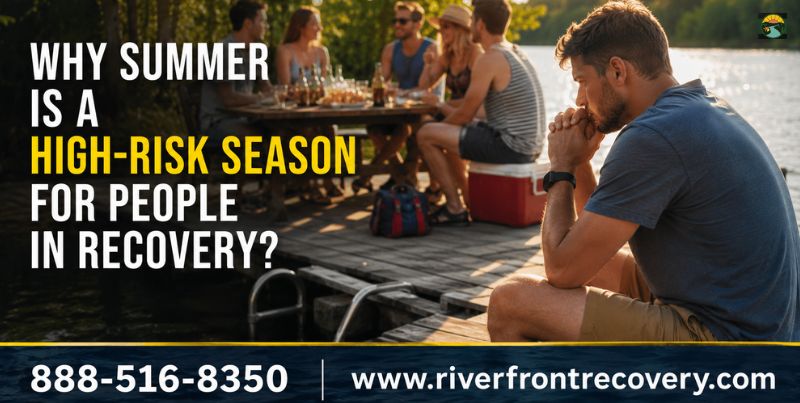
Why Summer Is a High-Risk Season for People in Recovery?
Summer is statistically one of the highest-risk periods for people in recovery. Longer days, unstructured time, social events nearly every weekend, and cultural norms that tie almost every outdoor activity to alcohol create a perfect storm of triggers.
Research from the Substance Abuse and Mental Health Services Administration (SAMHSA) consistently shows that social settings where alcohol is present are among the leading environments for relapse. Summer concentrates those settings into a few short months.
The reasons summer is particularly challenging include:
- More free time , unstructured time is one of the most well-documented relapse risk factors
- More invitations , the social calendar fills up fast, and saying no to everything is not realistic
- Heat and discomfort , physical discomfort can lower emotional resilience
- Nostalgia triggers , summer activities are often tied to memories of drinking
- Peer pressure , “come on, it is just one drink” is most common in casual summer settings
Knowing this in advance is not meant to frighten you. It is meant to help you prepare. Awareness is the first layer of protection.
Understanding Social Pressure and Alcohol Triggers
Not all triggers look the same. Some are obvious , a cooler full of beer at a barbecue. Others are subtle , the smell of sunscreen that reminds you of a specific summer when you were drinking heavily.
Common summer triggers include:
- Seeing other people drinking and having fun
- Being offered a drink repeatedly by people who do not know you are in recovery
- Feeling left out of social bonding moments built around alcohol
- Boredom or anxiety at events where you do not feel comfortable
- Emotional stress from family gatherings or difficult relationships
Understanding your personal triggers before the event , not during it , gives you time to build a response. Write them down. Talk them through with a counselor, sponsor, or a recovery support group member. The more clearly you can name your triggers, the less power they have over you in the moment.
How to Prepare Before Attending a Social Gathering?
Preparation is everything. Walking into a summer event without a plan is like driving in an unfamiliar city without directions , you might be fine, but the risk is unnecessary.
Before you go to any summer social event:
- Decide in advance whether you are going and how long you will stay
- Eat a full meal before you arrive , hunger lowers emotional regulation
- Bring your own drinks , sparkling water, lemonade, or non-alcoholic options you actually enjoy
- Identify your exit , know how you are getting home and have your own transportation if possible
- Tell one person where you are going and check in with them during the event
- Have a reason to leave prepared , you do not owe anyone a detailed explanation
The goal of preparation is not to go in defensively. It is to go in confidently , knowing you have thought it through and made a plan that protects your recovery without isolating you from life.
Practical Strategies for Staying Sober at Events
Once you are at the event, your preparation starts to pay off. Here are strategies that work in real social situations:
Keep a drink in your hand. A glass of sparkling water or iced tea stops the “can I get you a drink?” question before it starts. It is simple, and it works.
Stay near people who support you. If you know anyone at the event who is sober or who knows about your recovery, stay close to them. Their presence creates a buffer.
Permit yourself to step away. Go for a walk. Spend a few minutes alone. Check in with yourself. If the pressure builds, stepping outside for ten minutes can reset your thinking.
Have an honest response ready. You do not need a complicated story. “I am not drinking today” is a complete sentence. Most people will accept it and move on.
Set a time limit. You do not have to stay for the whole event. Arriving later or leaving earlier than everyone else is perfectly fine. Two hours at a gathering is often enough to connect with people without overstaying your comfort zone.
How to Handle Pressure From Friends and Family?
Some people will push back when you decline a drink. This is frustrating, but it is also predictable , which means you can prepare for it.
Most people who pressure others to drink are not doing it maliciously. They are doing it because they are not thinking carefully, or because your sobriety makes them briefly uncomfortable about their own choices. That is their issue, not yours.
How to handle it:
- Stay calm and firm. You do not need to justify yourself or argue.
- Change the subject. Redirect the conversation to something else , it usually works immediately.
- Be brief and direct. The longer you explain, the more room there is for debate.
- Walk away if needed. If someone continues to push after you have declined clearly, removing yourself from the conversation is a completely appropriate response.
If certain family members or friends consistently undermine your sobriety, it is worth addressing that directly outside of a social event setting , with support from a counselor if needed.

Building Your Sober Support Network for Summer
Your support network is your strongest asset during high-risk periods. Before summer starts, actively strengthen it.
This means:
- Attending recovery meetings more regularly, heading into summer, not less
- Connecting with a sponsor or accountability partner and agreeing to check in through the season
- Joining a community group or sober social activity, so summer has positive experiences built into it
- Being honest with the people closest to you about what you need during this time
Recovery support programs offer structured peer connection that is especially valuable during high-pressure seasons. Group meetings, one-on-one counseling check-ins, and peer support networks all provide the kind of consistent human contact that keeps recovery stable when external pressures increase.
If you are not currently connected to a recovery support program, summer is a good reason to start , not after a crisis, but before one.
The Role of Sober Living Programs in Seasonal Challenges
Sober living programs provide structured, substance-free living environments alongside peer accountability and access to recovery resources. For people in early recovery , or those who feel their home environment increases their risk during summer , sober living offers a stable foundation that makes seasonal challenges much more manageable.
Even for people not living in a sober living home, the principles that make those environments work apply broadly:
- Structure reduces risk. Fill your summer calendar with intentional activities, not just whatever comes up.
- Accountability works. Tell someone who cares about your recovery what your plans are
- Community protects. Isolation is the environment where relapse grows. Connection is the environment where recovery grows.
- Routine matters. Sleep schedules, meal times, exercise , these basics keep your nervous system regulated and your decision-making stronger
What to Do If You Feel Like You Are Slipping?
Feeling tempted is not the same as relapsing. Temptation is a normal human experience, including in recovery. What matters is what you do with it.
If you feel your resolve weakening at an event or after one:
- Leave the situation immediately , do not try to tough it out.
- Call someone , a sponsor, a friend in recovery, a counselor, anyone who understands
- Go somewhere safe , home, a meeting, anywhere that removes you from the trigger environment.
- Be honest , tell your support network what happened, even if you did not drink. Honesty prevents shame from building into something worse.
- Get back into structure , increase meeting attendance, reach out to your program, and treat the near-miss as useful information, not a reason for shame.
A close call handled well makes you stronger. The same close call handled alone and in silence is where real risk lives.
Staying Alcohol-Free During Summer Social Events
Enjoy summer social events while remaining alcohol-free with simple, practical strategies. Learn how to manage peer pressure, plan ahead, and stay confident in social settings. Make the most of every gathering while protecting your recovery and maintaining a healthy, balanced lifestyle.
Get Started NowEnjoying Summer Sober , It Is Better Than You Think
Here is something that surprises many people new to sober summers: they are genuinely better.
You remember everything. You wake up the next day feeling well. You have real conversations. You actually taste the food at the barbecue. You are fully present at the moments that matter.
Sober summers are not a consolation prize. They are the real thing , clear, connected, and fully lived. Many people in long-term recovery describe summer as one of their favorite seasons, precisely because they can actually experience it.
Build your summer intentionally. Plan sober activities , hiking, swimming, concerts, farmers markets, road trips, cookouts where you bring your own drinks. Join a sober social group. Invite friends who respect your recovery to activities you genuinely enjoy.
Summer belongs to you, too. You just get to experience it more clearly than most people do.
FAQs
Is It Normal to Feel More Tempted During Summer?
Yes, completely. Summer concentrates social drinking situations into a short window of time. Higher exposure to triggers plus a less structured daily routine creates more temptation for most people in recovery. This is well-documented and widely recognized in addiction recovery research. Knowing it is normal reduces shame and helps you plan appropriately.
Should I Avoid All Summer Social Events to Stay Safe?
Not necessarily. Complete avoidance can lead to isolation, which is itself a relapse risk. The goal is not to avoid life , it is to engage with it thoughtfully. Assess each event individually, prepare specifically for the ones you attend, and give yourself full permission to skip ones that feel genuinely risky.
How Do I Tell People I Am Not Drinking Without Going Into Detail?
You do not have to explain your recovery to anyone. Simple phrases work well: “I am not drinking right now,” “I am taking a break from alcohol,” or “I am good with water, thanks.” Most people will not push further. Those who do are telling you something useful about themselves.
How Can Recovery Support Programs Help During Summer?
Recovery support programs provide consistent structure, peer accountability, and professional guidance during high-risk periods. Regular check-ins, group meetings, and counseling access all reduce the isolation and unstructured time that increase relapse risk in summer. Staying actively engaged with your program through summer , rather than reducing involvement , is one of the most protective steps you can take.
What If My Family Does Not Support My Sobriety at Gatherings?
This is painful and unfortunately common. You have several options: attend with a sober support person who knows your situation, limit time at events where you feel unsupported, have direct conversations with key family members about what you need, or work with a counselor on boundary-setting strategies. You cannot control other people’s behavior , but you can control your exposure to it and build support elsewhere.
Conclusion
Staying sober during summer social gatherings takes preparation, honest self-awareness, and a strong support network , but it is completely achievable.
Summer does not have to be a season to endure. With the right tools and the right people around you, it can be a season that actually reinforces your recovery rather than threatening it. Plan, know your triggers, lean on your community, and give yourself credit for every sober day , including the hard ones.
Riverfront Recovery supports people through exactly these kinds of real-life challenges , not just in clinical settings, but in the practical moments that make up a sober life.
“Sobriety does not mean missing out on summer. It means finally being present enough actually to enjoy it.”