Most people who need addiction treatment are the last ones to see it, and that wait makes everything harder.
Addiction does not arrive all at once. It builds slowly, quietly, and by the time it becomes obvious to the people around you, it has usually been there for a long time. Knowing the addiction warning signs early is not about labeling yourself. It is about getting honest with what is actually happening so you can make a real decision. According to SAMHSA, over 40 million Americans had a substance use disorder in 2023, yet only a fraction received treatment. The space between needing help and seeking it is almost always filled with denial and waiting for a moment that feels more certain.
Riverfront Recovery works with people at every point in that journey. This guide names ten clear signs that professional help is the right next step, plainly, without judgment.
Objective
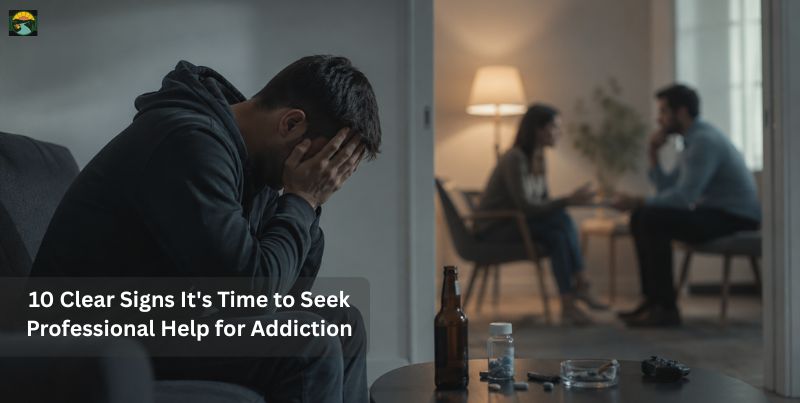
This blog helps individuals and families identify specific behavioral, physical, and emotional signs that addiction has reached a point where professional treatment is the right and necessary response.
Key Takeaways
- Addiction warning signs are often visible long before the person experiencing them acknowledges them
- Failed quit attempts, rising tolerance, and withdrawal symptoms are among the clearest indicators
- Alcohol dependency signs include needing more to feel the same effect and discomfort when not drinking
- Professional help is not a last resort, it is the most effective response at any stage
- Recognizing these signs early significantly improves treatment outcomes
Table of Contents
- Why Recognizing Addiction Warning Signs Matters
- Sign 1: You Have Tried to Stop and Cannot
- Sign 2: Your Tolerance Has Increased
- Sign 3: You Experience Withdrawal Symptoms
- Sign 4: Your Relationships Are Suffering
- Sign 5: Work or School Performance Has Declined
- Sign 6: You Use to Cope With Emotions
- Sign 7: You Have Lost Interest in Things You Used to Enjoy
- Sign 8: You Keep Using Despite Real Consequences
- Sign 9: People Close to You Have Said Something
- Sign 10: You Are Hiding Your Use
- Understanding Alcohol Dependency Signs Specifically
- FAQs
- Conclusion
Why Recognizing Addiction Warning Signs Matters?
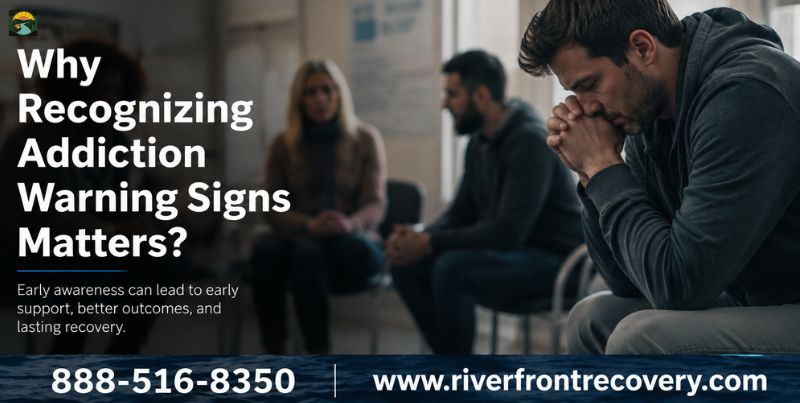
There is a widely held belief that someone needs to hit rock bottom before they are ready for help. That belief is both wrong and harmful. Research consistently shows that people who enter treatment earlier in addiction’s progression have better outcomes, shorter recovery timelines, and lower relapse rates than those who wait for catastrophe.
The problem is that addiction changes how the brain processes information, including information about itself. The same substance creating the problem also impairs the judgment needed to recognize it. That is why these ten external markers matter. They give you an honest reference point when your own thinking may not be fully reliable.
Sign 1: You Have Tried to Stop and Cannot
This is the single clearest sign that professional help is needed.
Most people developing a substance problem tell themselves at some point that they can stop whenever they want. The real test is actually trying. If you have made a genuine attempt to stop, not just cut back, but fully stop, and could not maintain it, that is not a failure of willpower. It is a medical reality.
Repeated failed quit attempts are one of the diagnostic criteria for substance use disorder in the DSM-5. They indicate the brain’s reward system has been altered in ways that make self-directed quitting very difficult without professional support.
Sign 2: Your Tolerance Has Increased
Tolerance means you need more of a substance to get the same effect as a smaller amount used to produce.
This is one of the earliest addiction warning signs and one that people often rationalize as experience or habit. In reality, rising tolerance is your brain adapting neurologically to constant exposure, reducing its natural response to the substance over time.
If you are drinking twice as much as you used to for the same feeling, or using more of a drug than six months ago, tolerance has developed, and the pattern is progressing.
Sign 3: You Experience Withdrawal Symptoms
Withdrawal happens when your body has become physically dependent on a substance, and you reduce or stop using it.
Common withdrawal symptoms include:
- Anxiety, irritability, or restlessness when not using
- Shaking, sweating, or nausea after stopping
- Insomnia and disrupted sleep
- Intense cravings within hours of the last use
- Heart palpitations or elevated blood pressure
Alcohol withdrawal specifically can be medically dangerous. In severe cases, it causes seizures and a condition called delirium tremens. This is a direct reason why professional medical supervision is essential, not optional, when physical dependence is present.
Sign 4: Your Relationships Are Suffering
Addiction damages relationships in consistent, predictable ways. Arguments about use, broken promises, eroded trust, and growing distance from people who matter, these patterns appear in almost every case.
Ask yourself honestly:
- Have people you care about expressed worry about your drinking or drug use?
- Have you had repeated conflicts where substance use was at the center?
- Have you pulled away from friends or family who do not use?
- Have you been absent, physically or emotionally, at moments that mattered?
Relationship damage is both a consequence of addiction and a symptom of it. It tends to compound over time.
Strong Signs You May Need Professional Addiction Help
Learn the strong signs that show you may need professional addiction help. From changes in behavior to struggles in daily life, early support can make a real difference. Understand when to seek help and take the first step toward a healthier, more stable future today.
Get Started NowSign 5: Work or School Performance Has Declined
Addiction does not stay contained to personal time. It affects concentration, memory, motivation, and decision-making, all of which show up in professional and academic life.
Signs in this area include:
- Missing deadlines or appointments regularly
- Arriving late or calling in sick more often than before
- Difficulty focusing on tasks that used to feel manageable
- Declining quality of work
- Job loss or academic failure connected to substance use
If your performance has noticeably dropped and substance use is part of the picture, the two are almost certainly connected.
Sign 6: You Use to Cope With Emotions
Using substances to manage stress, anxiety, loneliness, depression, or emotional discomfort is one of the most common paths into addiction, and one of the clearest signs the relationship with a substance has become unhealthy.
This creates a specific cycle. Emotional pain drives use. Temporary use numbs the pain. The pain returns, often worse, and drives more use. Over time, every other coping mechanism disappears because the substance has replaced them all.
If you cannot imagine handling a difficult day or an uncomfortable emotion without using, that dependency is real, psychologically and often physically.
Sign 7: You Have Lost Interest in Things You Used to Enjoy
One of the quieter but telling addiction warning signs is the slow disappearance of hobbies, interests, and activities that used to bring genuine satisfaction.
This happens because addiction progressively reorganizes the brain’s priority system. The substance moves to the top, and everything else, sport, creativity, social connection, family, gradually gets displaced. This is not a personality change. It is what addiction does to the brain’s reward circuitry over time.
Sign 8: You Keep Using Despite Real Consequences
Continuing to use despite experiencing direct, clear negative consequences is one of the defining features of addiction.
Those consequences might include:
- Health problems a doctor has linked to your substance use
- Legal trouble, such as a DUI or possession charge
- Financial strain from spending on substances
- Repeated relationship breakdowns
- Hospitalization related to use
Most people without addiction, when faced with these outcomes, would stop. When consequences accumulate and use continues anyway, it is a strong signal that addiction’s neurological mechanisms have overridden the normal decision-making process.
Sign 9: People Close to You Have Said Something
When multiple people in your life, at different times, in different ways, have raised concern about your drinking or drug use, that pattern matters.
People who care about you and observe you regularly often notice changes before you do. The brain’s capacity for self-deception under addiction is well documented. External perspectives cut through that.
If people have raised concerns and your response has consistently been defensiveness, dismissal, or minimization, that reaction itself is worth honestly examining.
Sign 10: You Are Hiding Your Use
Secrecy around substance use is a meaningful sign. On some level, hiding behavior means you already know something is wrong.
Hiding looks like:
- Drinking before a social event so no one sees how much you actually consume
- Keeping alcohol or substances where others would not find them
- Lying about how much or how often you use
- Using alone specifically so no one can observe it
- Consistently minimizing your use when asked directly
Hiding requires self-awareness. And self-awareness is exactly the starting point for getting honest with someone who can help.
Understanding Alcohol Dependency Signs Specifically
Alcohol is the most commonly misused substance and the one most frequently minimized because of its social acceptability. Alcohol dependency signs are regularly explained away as social drinking or stress relief.
Specific signs of alcohol dependency to watch for:
- Drinking in the morning or very early in the day
- Needing alcohol to feel functional or “normal.”
- Feeling anxious or irritable when alcohol is unavailable
- Memory gaps or blackouts during drinking episodes
- Physical symptoms, hand tremors, sweating, nausea, when not drinking
- Drinking alone regularly and increasingly
Any combination of three or more of these signs, occurring consistently, indicates alcohol use disorder. A professional assessment, not continued self-management, is the appropriate response.
FAQs
What Are the Earliest Addiction Warning Signs to Watch For?
The earliest signs are usually rising tolerance, increasing frequency of use, and beginning to use substances to manage emotions rather than for enjoyment. These early signals are easy to rationalize, which is why they are often missed until the pattern is well established.
Can Someone Function Normally and Still Have a Serious Addiction?
Yes. Functional addiction, maintaining work and relationships while using, is common, especially in early and middle stages. Functioning does not mean the problem is not serious. It means the consequences are not yet visible enough to disrupt daily life. The underlying health risks and neurological changes remain present and are progressing.
How Do I Know the Difference Between Heavy Drinking and Alcohol Dependency?
The clearest distinction is physical dependence, experiencing withdrawal symptoms when you stop or reduce drinking, and loss of control over how much you consume. If you regularly drink more than you intended and feel physically unwell when not drinking, alcohol dependency is likely.
Is Asking for Professional Help a Sign of Weakness?
No. Addiction is a recognized medical condition with evidence-based treatments. Seeking professional help for addiction is medically appropriate, the same way it is appropriate to seek help for any other health condition. Waiting because of stigma increases health risks and makes treatment more complex over time.
Conclusion
Recognizing that help is needed is not a defeat. It is the most honest decision available, and the one that changes everything.
These ten signs are not about judgment. They are a clear-eyed look at patterns that indicate addiction has moved beyond what self-management can address. The earlier they are recognized and acted on, the better the outcomes consistently are.
Professional treatment works. Medical support, evidence-based therapy, peer connection, and structured care all improve the chances of lasting recovery far beyond what is possible alone.
Riverfront Recovery is here for people who are ready to take that step, at whatever point they arrive.