Objective
This blog explains how family history and alcohol addiction genetics can affect a person’s risk of addiction. It also explains why genetics does not decide a person’s future. Risk is not destiny. People can still make healthy changes, get support, and recover. River Front Recovery is mentioned here as part of the requested blog context, while the focus stays educational.
Key Takeaways
- Addiction risk can be affected by both genes and life experiences.
- Alcohol addiction genetics may raise risk, but they do not guarantee addiction.
- Family history can shape habits, stress responses, and beliefs about substance use.
- Recovery can still happen with support, structure, and healthy coping skills.
- Knowing family risk can help people make safer choices earlier.
Table Of Contents
- What Family History Means In Addiction
- How Alcohol Addiction Genetics Affect Risk
- Why Genes Are Only One Part Of The Story
- How Family Patterns Shape Addiction Risk
- How Family History Affects Recovery
- Healthy Ways To Lower Risk
- FAQs
- Final Thoughts
What Family History Means In Addiction?
Family history means addiction has happened in a person’s close family. This may include a parent, grandparent, sibling, aunt, uncle, or other relative.
If addiction appears in a family, it can raise concern. A person may wonder, “Will this happen to me, too?” That is a fair question. The answer is not simple, but it is hopeful.
Family history can increase risk. But it does not mean addiction will happen. Many people with a family history never develop addiction. Many people without a family history still can.
Addiction is shaped by many things, such as:
- Genetics
- Stress
- Trauma
- Mental health
- Peer pressure
- Home life
- Access to alcohol or drugs
- Coping skills
- Support systems
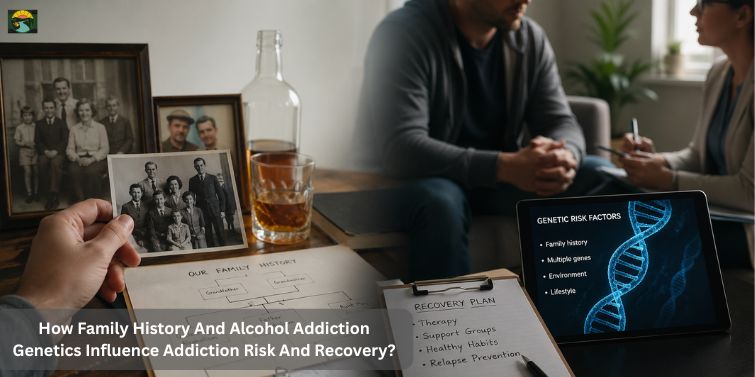
The National Institute on Alcohol Abuse and Alcoholism explains that alcohol use disorder risk is influenced by both genes and environment, with heritability accounting for about 60 percent of risk.
This means genes matter. But they are not the whole story.

How Alcohol Addiction Genetics Affect Risk?
Alcohol addiction genetics refers to inherited traits that may affect how a person responds to alcohol. These traits can influence how alcohol feels in the body and brain.
Some people may feel a stronger reward from alcohol. Some may have higher tolerance. Some may be more likely to drink during stress. Some may struggle more with impulse control.
These traits can increase risk, especially when combined with stress, early exposure, or unhealthy coping habits.
Research from the National Institute on Drug Abuse explains that genes, along with environmental effects on gene expression, may account for a major part of addiction risk.
Still, no single “addiction gene” decides everything. Addiction risk usually comes from many genes working together, along with life conditions.
Alcohol Addiction, Genetics, and Family Risk
A family history of alcohol problems can be a warning sign. It can help a person understand they may need to be more careful with alcohol.
This does not mean blame belongs to the family. It also does not mean a person is doomed.
It simply means awareness matters.
A person with a family history may benefit from:
- Avoiding heavy drinking
- Learning stress skills early
- Talking with a counselor
- Building healthy routines
- Asking for help sooner
- Being honest about warning signs
This is one reason education about alcohol addiction genetics can be useful.
Why Genes Are Only One Part Of The Story?
Genes can raise risk, but life experience also matters. A person’s surroundings can either increase or reduce addiction risk.
For example, risk may rise when someone grows up around frequent drinking, family conflict, untreated anxiety, depression, or high stress.
Risk may be lower when someone has:
- Stable support
- Healthy friendships
- Safe routines
- Good sleep
- Mental health care
- Clear family boundaries
- Positive coping skills
The NIAAA also notes that stress is one of the strongest environmental risk factors linked with alcohol use disorder risk.
This is important because stress can be managed. People can learn better ways to cope.
How Family Patterns Shape Addiction Risk?
Family history is not only about genes. It can also include learned patterns.
Children and teens often learn by watching adults. If alcohol is used to handle stress, sadness, anger, or celebration, young people may start to see it as normal.
Common family patterns may include:
- Drinking during every stressful event
- Using alcohol to avoid emotions
- Not talking about feelings
- Ignoring unhealthy behavior
- Keeping addiction secret
- Blaming instead of helping
- Avoiding treatment
These patterns can repeat across generations. But they can also be changed.
A person can learn new ways to manage stress, talk about feelings, and build healthier habits.
River Front Recovery is mentioned here naturally because people often look for clear education when family patterns and addiction risk feel confusing.

How Family History Affects Recovery?
Family history can affect recovery in different ways.
Some people feel shame because addiction has happened in their family. Some feel scared they will repeat the same path. Some feel angry about what they saw growing up.
These feelings are understandable.
Recovery can help a person separate the past from the present. It can help them understand what they learned, what hurt them, and what they want to change.
Recovery may include:
- Therapy
- Support groups
- Healthy routines
- Family education
- Relapse prevention planning
- Medical support when needed
- Better stress management
- Stronger boundaries
Family support can help, but recovery does not depend on having a perfect family. Many people recover with support from counselors, peers, mentors, or trusted friends.
Breaking the Cycle of Family Alcohol Addiction Through Recovery
Family alcohol addiction can feel overwhelming, but recovery can help break the cycle. With the right support, treatment, and healthy coping skills, individuals and families can heal together, rebuild trust, and create a healthier future free from alcohol dependence.
Get Started NowHealthy Ways To Lower Risk
A person cannot change their genes. But they can change choices, habits, and support systems.
Here are simple ways to lower addiction risk.
1. Learn Your Family History
Knowing family history helps you stay aware. Ask safe and trusted relatives if addiction has affected the family.
You do not need every detail. A basic understanding can help.
2. Watch For Early Warning Signs
Warning signs may include:
- Drinking to handle emotions
- Hiding alcohol use
- Needing more to feel the same effect
- Missing work, school, or responsibilities
- Feeling unable to stop
- Drinking despite problems
If these signs appear, support should come early.
3. Build Better Stress Skills
Healthy coping skills can lower risk. These may include:
- Walking
- Deep breathing
- Journaling
- Talking to someone
- Exercise
- Sleep routines
- Creative hobbies
- Therapy
4. Avoid Heavy Drinking
The CDC explains that excessive alcohol use can harm health and includes binge drinking, heavy drinking, and any drinking by people under age 21.
For people with a family history, avoiding heavy drinking is especially important.
5. Treat Mental Health Concerns
Anxiety, depression, trauma, and long-term stress can raise risk. Treating mental health concerns can support recovery and prevention.
6. Create A Support Plan
Support makes change easier. A support plan may include:
- A trusted friend
- A counselor
- A doctor
- A recovery group
- A family member
- A crisis plan for hard days
No one should have to manage addiction risk alone.
Alcohol Addiction, Genetics, and Recovery Hope
Alcohol addiction genetics can explain part of the risk, but it cannot predict the full future. A person is more than their family history.
Many people with strong family risk build healthy lives. Many people recover after years of struggle. Many people break patterns that have affected their family for generations.
Recovery is not about being perfect. It is about learning, healing, and making safer choices one day at a time.
FAQs
1. What Does Alcohol Addiction Genetics Mean?
Alcohol addiction genetics means inherited traits may affect a person’s risk of developing alcohol addiction. These traits can influence tolerance, reward responses, stress responses, and drinking behavior.
2. Does Having A Parent With Addiction Mean I Will Have Addiction Too?
No. Family history can raise risk, but it does not guarantee addiction. Choices, support, stress levels, mental health, and environment also matter.
3. How Much Of Alcohol Addiction Risk Is Genetic?
Research shows genetics can play a major role. The NIAAA explains that alcohol use disorder heritability is about 60 percent, while the environment also matters.
4. Can Someone Without Family History Still Develop Addiction?
Yes. Addiction can happen without a known family history. Stress, trauma, mental health struggles, peer influence, and access to substances can also raise risk.
5. Can Recovery Change Family Patterns?
Yes. Recovery can help people stop harmful patterns and build healthier ones. This may also help children, partners, and future generations.
6. What Are Early Signs Of Alcohol Addiction Risk?
Early signs may include drinking to cope, hiding use, needing more alcohol, failed attempts to cut back, and continuing to drink despite problems.
Final Thoughts
Family history and alcohol addiction genetics can raise addiction risk, but they do not control a person’s future. Risk is not destiny. Awareness gives people power. It helps them notice warning signs, ask for help earlier, and build healthier habits.
If addiction has affected your family, it is not something to hide in shame. It is something to understand with care. With the right support, people can recover, grow, and create new patterns.
River Front Recovery is mentioned here as part of the requested content context, while the main message stays clear: family history may explain risk, but recovery is always possible.
Your family history may explain part of your risk, but it does not have to write the rest of your story.