Meth addiction is among the most difficult substance abuse problems to conquer. It can affect the brain in a short time and cause a drastic behavior change, and it frequently leads to severe social and health issues. For families and individuals living in Georgia, understanding the reasons residential care is effective could have a significant impact.
At River Front Recovery, most people are looking for solutions. They want to understand the reasons why meth addiction is potent and also how residential rehabilitation aids individuals to regain control of their lives. This blog aims to give caring, simple-to-understand details. It provides a rationale for why residential treatment is effective in treating addiction to meth in Georgia, as well as how that form of therapy can help long-term recovery.
The primary focus here is on education, empathy, and clarity.
Understanding Meth Addiction and Why It Is So Hard to Quit
Methamphetamine is a potent stimulant. It produces powerful feelings of confidence, energy, and even pleasure. However, it also alters brain wiring.
Over time, meth damages the brain regions that are responsible for:
- Decision-making
- Controlling your emotions
- Memory
- Motivation
This is why quitting can be extremely difficult without a structured support system.
Why Meth Addiction Escalates Quickly
Meth can be a fast-acting drug and can last for a long time. This can increase the risk of addiction.
Common effects are:
- Rapid tolerance requires more to experience the same effects
- Extreme crashes occur when the drug is removed from the drug
- A strong psychological desire
Due to these effects, meth addiction typically takes over your daily routine faster than other substances.

Why Residential Care Matters for Meth Addiction in Georgia
Meth Addiction Requires More Than Willpower
Many believe that they will be able stop meth on their own. When it comes to meth, this notion is often the reason for relapse and guilt.
Residential care is effective because it shields the individual from triggers and provides constant support. This is particularly important in Georgia, as the availability of drugs and social pressures could make recovery more difficult in the security of a safe environment.
What Is Residential Care for Meth Addiction?
The term “residential care” refers to living at a rehab facility for a specified period. It allows patients to concentrate entirely on healing.
The residential treatment for meth addiction in Georgia generally comprises:
- 24/7 surveillance
- Scheduled daily schedules
- Group and individual therapy
- A drug-free and safe environment
This stage of care focuses on the psychological and physical consequences of meth addiction.
The Importance of 24/7 Supervision in Meth Addiction Treatment
Why Constant Support Is Critical
Early recovery and withdrawal from meth aren’t always predictable. Depression, emotional crashes, and cravings may appear at any time.
24/7 supervision helps by:
- Monitoring the mood and changes in behavior
- Quickly responding to emotional stress
- Reduced risk of relapse at vulnerable times
This ongoing support is among the main reasons that residential care is a good option for meth addiction treatment in Georgia.
How a Structured Environment Supports Recovery
Structure Restores Stability
The meth addiction often disrupts routine. Meals, sleep, and other responsibilities can get sloppy.
The structure of residential care is brought back into the home by:
- Set the wake-up and sleep time.
- Regular meals
- Sessions for planned therapy
- A time to rest and reflect
This structure aids the brain to learn healthy patterns and decreases anxiety.
Why a Drug-Free Environment Is Essential
Removing Access Reduces Risk
Recovery in the beginning is not always secure. Experiments with drugs or other people who take them could trigger a relapse.
A drug-free atmosphere can help by:
- Eliminating meth’s access
- Reduced environmental triggers
- Ensuring emotional and physical safety
Many people living in Georgia who are moving away from their familiar environment are taking an essential step towards healing.
Therapy as a Core Part of Residential Care
Addressing the Psychological Side of Meth Addiction
The problem with meth addiction is not just physical. It’s a deeply psychological issue.
Residential care is a structured therapy to assist those who are:
- Find out why they began using
- Recognize patterns and triggers
- Learn healthier coping skills
It is essential for long-term healing.
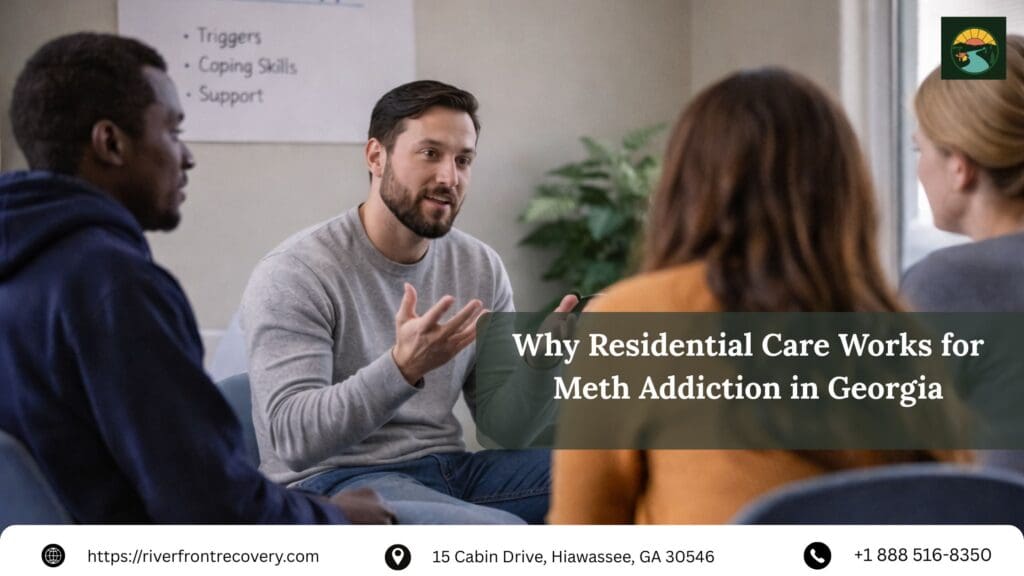
Group Therapy and Shared Experience
Why Connection Matters
The meth addiction can lead to feelings of isolation. Some people feel embarrassed or misunderstood.
Group therapy can be offered:
- Sharing of understanding
- Reduction of feelings of isolation
- The support of peers, as well as accountability
Sharing similar experiences with others can help individuals feel less isolated and optimistic.
Individual Therapy for Personal Healing
One-on-One Support Makes a Difference
Each person’s story is unique. Individual therapy provides the possibility of exploring:
- Trauma
- Stress
- Health concerns related to mental health
- Personal goals
This personal support helps strengthen the healing process.
Mental Health Support in Residential Care
Meth Addiction and Mental Health Are Linked
Many meth addicts have the following symptoms:
- Anxiety
- Depression
- Paranoia
- Changes in mood
Residential treatment in Georgia is usually focused on stabilization of mental health and addiction recovery. This approach is more effective and lowers the risk of relapse.
In River Front Recovery, education about mental health is a significant part of helping families and individuals understand why residential care is effective.
Why Residential Care Is Especially Effective in Early Recovery
The First Weeks Are the Most Vulnerable
The first stages of recovery can be the most challenging.
In this period, people could be confronted with:
- Anxious cravings
- Motivation is low
- Trouble with emotions
- Physical exhaustion
Care at home provides ongoing assistance during this crucial phase, during which the risk of relapse is the highest.
Longer Stays Support Stronger Outcomes
Time Allows the Brain to Heal
Meth can cause lasting changes to the brain. It takes time to heal.
Residential care allows people to:
- Focus on your recovery
- Develop healthy habits slowly
- Build coping abilities
The longer treatment time usually leads to greater stability over the long term.

How Residential Care Helps Families Too
Reducing Stress and Fear
Families can feel helpless when watching the person they love struggle with meth addiction.
Residential care helps families by:
- Assuring security
- In reducing the need for crises at home
- The healing process requires space.
Knowing that your loved ones are in a safe, drug-free environment can provide relief.
Common Misconceptions About Residential Treatment
“Residential Care Is Only for Severe Cases”
In the real world, residential care can aid anyone trying to stop meth abuse safely and effectively. Early intervention usually leads to better results.
“Leaving Home Makes Things Worse”
In the case of meth addiction, remaining in the same space is a common way to increase the risk of relapse. A temporary separation may help in long-term recovery.
Why Georgia Residents Benefit From Residential Care
Georgia faces unique challenges, including:
- Access to meth is available in both urban and rural zones
- In some communities, there is a lack of support.
- Social stigma around addiction
Residential care can provide a secure release from the pressures.
What Happens After Residential Care
Preparing for Life Beyond Treatment
Residential care isn’t the final stage of recovery. It’s a good start.
In treatment, patients usually discover:
- Relapse prevention skills
- Stress management techniques
- A healthy daily routine
These tools help sustain recovery after the end of the residential setting.
Real Recovery from Meth Addiction Starts in a Safe, Structured Environment
Meth addiction changes the brain and makes quitting alone overwhelming. Residential care at River Front Recovery provides 24/7 support, evidence-based therapy, and a completely drug-free setting where healing can begin. With structured routines, mental health care, and compassionate guidance, individuals in Georgia can rebuild stability and take back control of their lives.
FAQs: Residential Care for Meth Addiction in Georgia
How is residential care so effective in treating people with an addiction to meth in Georgia?
Residential treatment is highly effective in treating addiction to meth in Georgia because it provides 24-hour monitoring, a structured program, and a safe environment that decreases the chance of relapse.
What does a drug-free atmosphere aid in the process of overcoming addiction to meth?
In a drug-free setting, you can avoid the possibility of meth use and reduce triggers, which makes the early stages of recovery more secure and stable.
Does residential treatment need to be considered to treat the addiction to meth?
For a lot of people needing residential care, it is a must due to meth addiction’s intense cravings and emotional instability, which are challenging to manage without continuous help.
What is structured therapy? How can it aid meth addiction?
Therapy structured helps patients recognize addiction patterns, tackle mental health issues, and build better coping strategies.
Can residential care assist in the treatment of mental health issues connected with meth dependence?
Yes. Residential care typically addresses meth addiction as well as mental health problems, which can improve the overall outcome of recovery.
How long will residential meth treatment typically last?
Your individual requirements determine the length of stay. The longer stays usually offer more time to heal and build skills.
Conclusion: A Safer Path Forward Starts With Support
The meth addiction is powerful; however, recovery is achievable when you have the right environment and support. Residential treatment can provide what people are unable to achieve on their own. Continuous monitoring, structured therapy, and a drug-free environment provide the conditions to heal.
At River Front Recovery, the focus is on safety, understanding, and long-term stability. Residential care offers people in Georgia the space, assistance, and structure that they need to overcome meth addiction and achieve better health.
If you, or someone else you know, has a problem with meth addiction, seeking out professional residential treatment could be a transformative step. Seeking help is not a sign of vulnerability. It’s a wise and hopeful decision.