When a person finally agrees to get help, families often feel relief and panic at the same time. Relief comes from knowing change may finally happen. Panic comes from having to make a decision fast.
That is why many people start comparing programs right away, especially after a crisis, a relapse, or even an alcohol addiction intervention. In those moments, it is common to search for drug addiction treatment in Georgia services without fully understanding what separates private care from public or state-funded care.
At River Front Recovery, families often come in with one simple question: What is the real difference, and which option gives my loved one the best chance to begin treatment without delay? That question matters because timing, support, and structure can shape the first stage of recovery in a big way.
What Private And Public Rehab Really Mean
Before comparing them, it helps to understand what these two options are.
Private Rehab
Private rehab is treatment paid for through private insurance, self-pay, financing, or a mix of those options. Private treatment providers usually run these programs. Some are small. Some are large. Some focus on detox and short stays. Others offer longer residential care, therapy, and aftercare planning.
Private programs often have more flexibility in how treatment is structured.
Public Or State-Funded Rehab
Government funding, grants, or community health programs usually support public or state-funded rehab. These services are designed to make treatment available to people who may not have enough money, insurance, or other resources.
These programs can be very important. For many people, they are the reason treatment is possible at all.
The main point is this: both options can help people recover. The difference is often in access, comfort, resources, and how personalized the treatment feels.

Cost Differences Families Need To Understand
For most people, cost is the first concern.
Public Or State-Funded Programs
Public programs are often:
- Free
- Low cost
- Based on income
- Linked to county or state services
- Designed for people with limited financial options
This can remove a major barrier to care. If someone has no insurance and no savings, a state-funded program may be the most realistic path.
But lower cost can also mean limited space, fewer staff, and more pressure on the system.
Private Rehab
Private rehab usually costs more. That part is true. But many families assume private care is impossible before checking insurance benefits. In reality, some private centers work with insurance in a way that reduces the cost more than people expect.
Private treatment may include:
- Insurance verification
- Flexible payment options
- More medical staff
- More therapy time
- Lower client numbers
- Better residential support
This does not mean expensive always means better. It means the experience is often different because the program has more resources per person.
When comparing drug rehabilitation centers, it helps to ask what is included in the price, not just what the number is.
Wait Times And Why Speed Matters?
This is one of the biggest differences between the two options.
Public Programs Often Have Waitlists
State-funded services can be in very high demand. That means a person may not get admitted right away. There may be:
- Screening steps
- Referral steps
- Bed shortages
- Delays based on county systems
- Waitlists that take days or weeks
This is hard because willingness to get treatment can come and go quickly. A person may say yes today and change their mind tomorrow.
Private Programs Often Move Faster
Private rehab usually has a faster intake process. In many cases, admission can happen the same day or the next day. That speed matters when detox is needed or when a person is finally ready to accept help.
This is one reason families look closely at private drug addiction treatment in Georgia options. They may feel they cannot afford to lose the window of readiness.
Fast admission does not solve everything, but it can prevent more delay, more risk, and more emotional back-and-forth.
Treatment Approach And Level Of Support
Both public and private programs may use proven treatment methods. But the amount of individual attention can be very different.
What Public Programs Often Offer
Public treatment often focuses on the basics that matter most:
- Assessment
- Detox referral or basic medical support
- Group counseling
- Recovery education
- Case management
- Community resource planning
This can still be meaningful care. For some people, this is enough to get started. A structured program, peer support, and a safe environment can make a real difference.

What Private Programs Often Offer?
Private treatment usually has more room to personalize care.
That may include:
- Individual therapy
- Family sessions
- Mental health support
- Trauma-informed care
- Smaller group sizes
- Longer residential options
- More detailed aftercare planning
For people with repeated relapses, severe cravings, mental health struggles, or unstable home environments, that extra level of support can matter a lot.
This is especially true for people who need more than short-term stabilization. They may need a treatment setting that looks beyond detox and starts dealing with the reasons substance use continued.
At River Front Recovery, this kind of focused support is often important for people who do not just need a bed but a real plan that fits their history, emotional health, and risk factors.
Privacy, Comfort, And Daily Life In Rehab
Some people feel guilty caring about comfort. They think treatment should only be about the clinical side. But the environment matters.
A person who feels safe, calm, and respected may be more likely to stay in treatment.
Public Programs
Public settings are often more basic and more crowded.
Daily life may include:
- Shared rooms
- Limited privacy
- Busy schedules
- Larger groups
- Simpler surroundings
That does not mean the care is bad. It means the setting is often more practical than personal.
Private Programs
Private rehab usually offers a more controlled and comfortable setting.
This may include:
- Quieter spaces
- Fewer clients
- More private rooms
- Better daily structure
- More staff support
- Space for rest and reflection
For some people, this makes a real difference. Professionals, parents, public-facing workers, or people who fear being recognized may value privacy more than they first admit.
Comfort alone will not create recovery. But a stable environment can help people stay open, regulate stress, and focus on treatment.
That is one reason many families compare drug rehabilitation centers not only by cost, but also by daily experience.
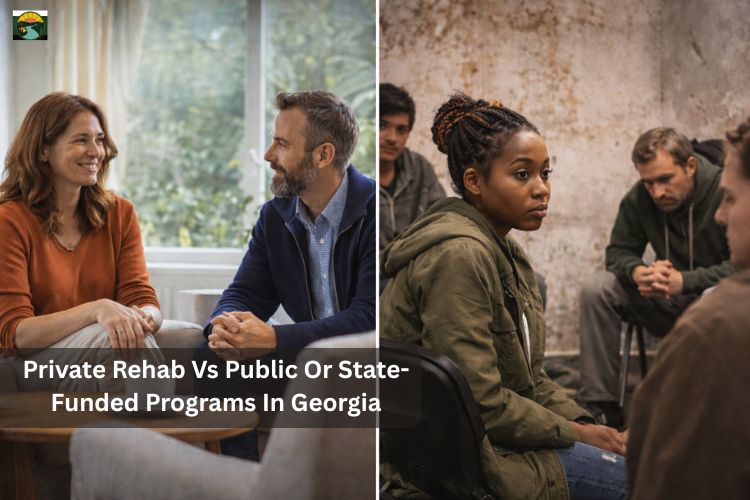
Comparing Rehab Options in Georgia: Private Care or State-Funded Programs
Understanding rehab options in Georgia can make choosing the right support easier. Explore how private care and state-funded programs differ in cost, access, privacy, and treatment flexibility so you can make a confident decision that supports long-term recovery.
Get Started NowWhich Option May Be Better For Different Situations?
There is no single answer that fits everyone. The right choice depends on the person.
A Public Or State-Funded Program May Be Better If:
- Money is extremely limited
- Insurance is not available
- The person needs immediate basic support
- A waitlist is manageable
- The addiction is serious, but the person can function in a simpler setting
- Community-based follow-up care is available
A Private Program May Be Better If:
- Detox is urgent
- There is a history of relapse
- Mental health issues are also present
- The person needs privacy
- Family wants fast placement
- One-on-one support is important
- A longer residential stay may be needed
- The home environment is unstable
When families compare drug addiction treatment Georgia choices, they often make the mistake of asking, “Which one is better?” A better question is, “Which one fits this person right now?”
That question leads to a more honest answer.
Some people need immediate structure and medical oversight. Some need affordable access above all else. Some need a private setting because shame, anxiety, or outside pressure may stop them from staying engaged.
Final Thoughts
Private rehab and public or state-funded rehab both have an important place in recovery care. One is not automatically right for everyone.
Public programs make treatment possible for people who may otherwise go without help. That matters deeply. Private programs often offer faster access, more privacy, and more personalized care. That matters too.
The best decision depends on urgency, finances, mental health needs, relapse history, and how much support the person will need once treatment begins. Families looking at drug rehabilitation centers should focus less on labels and more on fit.
River Front Recovery is one example of a private setting where people can begin treatment quickly, receive focused support, and step away from the stress and triggers that often keep addiction going.
FAQs
Is Private Rehab Better Than Public Rehab?
Not in every case. Private rehab is often faster and more personalized, but public rehab may still provide strong care and may be the best option when cost is the main issue.
Are State-Funded Programs In Georgia Legitimate?
Yes. State-funded programs are real treatment options and help many people begin recovery. They may have fewer amenities, but they still serve an important role.
Why Do Private Programs Admit People Faster?
Private centers usually have more control over admissions, fewer outside referral steps, and more flexibility with bed availability.
Do Private Programs Always Cost Too Much?
Not always. Some families find that insurance lowers the cost more than expected. It is worth checking benefits before assuming private care is out of reach.
What If Someone Changes Their Mind About Treatment?
That can happen. It is very common. This is why fast action matters. When a person is ready, delays can make the decision harder to keep.
Is Public Treatment Enough For Severe Addiction?
Sometimes yes, but not always. People with severe addiction, repeated relapse, or mental health conditions may need more intensive and individualized care.